The Hynes Lab
Disrupting the neuroscience of addiction
Simon Fraser University

Dr. Hynes and Prof. Njamnshi edit a special edition on astroctyes
October 2026: Dr. Hynes will serve as an editor of a new themed collection in Brain Communications (IF 4.5) focused on “Astrocytes in Neuropsychiatry: Basic, Preclinical, and Clinical Perspectives.” The collection highlights the rapidly expanding recognition of astrocytes as active regulators of neurotransmission, neural circuits, and behaviour, and their emerging importance in understanding neuropsychiatric and neurological disorders. Dr. Hynes will co-edit the collection alongside Professor Alfred Kongnyu Njamnshi of the University of Yaoundé I in Cameroon. The call welcomes original research, reviews, and perspectives spanning basic, translational, and clinical neuroscience. Particular emphasis will be placed on preclinical studies using cutting-edge neurotechnologies to investigate astrocyte function, neuron–glia interactions, and neurotransmission, as well as human neuroimaging, neurophysiology, clinical trials, and other translational approaches. Topics include addiction, depression, schizophrenia, bipolar disorder, autism spectrum disorder, anxiety disorders, neurodegenerative diseases, and related conditions.
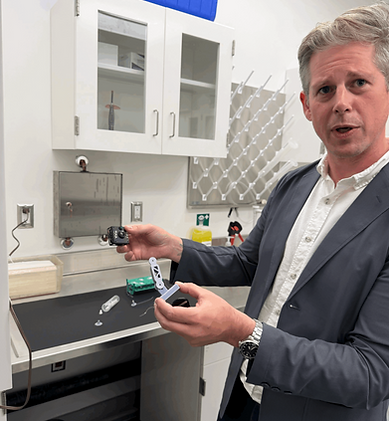
The Hynes Lab shows off their new toys
September 2026: The Hynes Lab was happy to meet Dr. Patricia Conrod and the CIHR Institute of Neurosciences, Mental Health and Addiction (CIHR-INMHA) at Simon Fraser University as part of their engagement tour. The visit highlighted the strength of neuroscience, mental health, and addiction research across SFU. We are especially thankful to Dr. Randy McIntosh, Director of the Institute for Neuroscience and Neurotechnology (INN), for helping foster such a collaborative research community. We had the opportunity to share some of our research using CRISPR gene-editing technology to better understand fentanyl use and to showcase our intravenous drug self-administration setup. It was also a great opportunity to learn more about the work CIHR-INMHA is doing to advance neuroscience and mental health research across Canada.


Dr. Hynes is awarded the CFI JELF Infrastructure Grant
August 2026: The Hynes Lab is excited to celebrate Dr. Tristan Hynes’ award from the Canada Foundation for Innovation’s John R. Evans Leaders Fund. The program supports researchers by providing the cutting-edge infrastructure needed to build ambitious new research programs. With this support, Tristan is building a first-of-its-kind research platform to investigate why some individuals are more vulnerable to addiction and relapse. The lab will examine how the brain and body contribute to both opioid and gambling addiction, combining sophisticated behavioural models with modern neuroscience approaches. This investment will help the Hynes Lab uncover the biology underlying addictive behaviour, train the next generation of scientists, and ultimately work toward more effective treatments for addiction.


Kim Marty is awarded the NSERC CGSM Research Scholarship
August 2026: Join us in congratulating our MSc student, Kimberley Marty, on being awarded the 2026/27 Tri-Agency Canada Graduate Research Scholarship through the Natural Sciences and Engineering Research Council of Canada. Her research will explore how biological sex differences influence the activation of cholinergic interneurons in the ventral striatum and dopamine neurons in the ventral tegmental area , and how these patterns are modulated by the astrocyte-targeting compound, N-acetylcysteine . Using both single-cell spatial transcriptomics and dual biosensor photometry during the rat gambling task, she will assess how astrocyte modulation shifts acetylcholine–dopamine coordination, revealing the sex-specific neural mechanisms underlying cost–benefit decision making.

Naloxone training delivered by Gurkirat Singh Nijjar
On August 16, 2026 members of the Hynes Lab recently completed naloxone and overdose-response training led by Gurkirat Singh Nijjar, medical student and founder of SOUDA. The training is especially relevant to our research. We study the neural mechanisms underlying addiction and opioid seeking, and some trainees handle potent opioids such as fentanyl in the laboratory. Safe handling procedures and PPE remain the first line of protection, but knowing how to recognize opioid toxicity and administer naloxone provides an important additional layer of emergency preparedness. The value extends well beyond the lab. Opioid poisoning can happen anywhere, and having the skills to respond quickly may save a life. For a group working to understand addiction and improve its treatment, naloxone training connects the science we do with the people and communities that ultimately motivate it.

Juniper Quin presents at the
SFU Cognitive Neuroscience Poster Day
On March 26, 2026, Juniper Quin presented a poster examining the role of striatal astrocytes in the development of heroin-seeking habits and their underlying sex-dependent molecular mechanisms. These were penultimate findings of Dr. Hynes' postdoctoral work with Professor David Belin at The University of Cambridge, funded by grants from The Leverhulme Trust and The Isaac Newton Trust to Dr. Hynes, and a UK Research and Innovation Grant to Professor Belin. Juniper worked hard to learn about the complex psychological theories and neurobiological mechanisms addressed in this set of studies. To extend upon these findings, she has now embarked upon an ambitious project to causally probe the role of the astrocytic dopamine transporter in cue-controlled fentanyl seeking.